

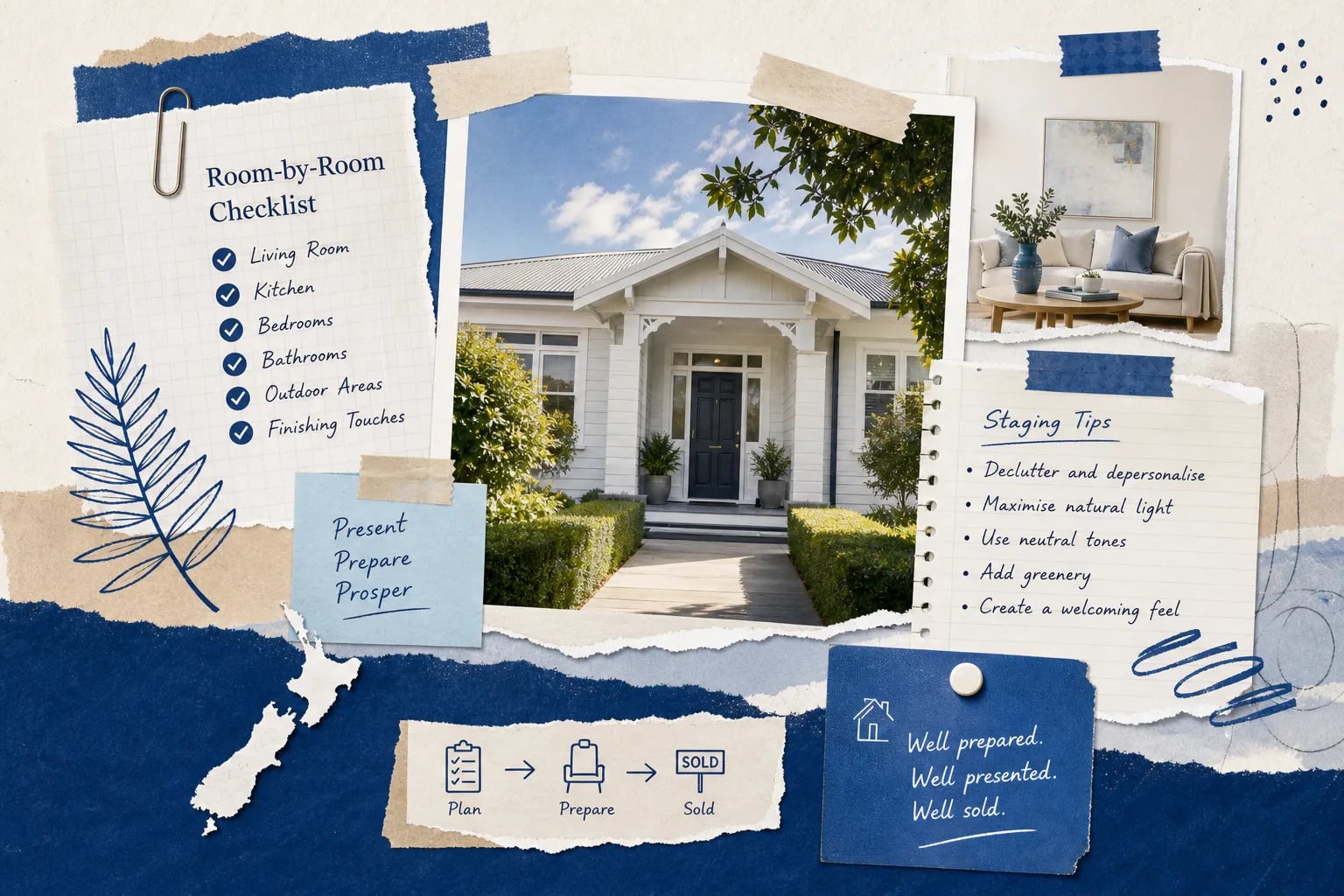
Preparing your home for sale is one of those tasks that feels manageable until you're actually standing in the lounge, realising the walls haven't been painted since 2011 and the bathroom grouting tells its own grim story. The home you've loved living in suddenly needs to compete against every other listing on the market, and buyers form opinions faster than you'd like.
This guide is a prioritised action plan, not a panic list.
The order in which you tackle preparation matters just as much as what you do. Start with staging before fixing the dripping tap, and you've wasted money. Book a landscaper before getting quotes on wall repairs, and you'll likely redo the sequence anyway. Knowing your suburb's buyer expectations also shapes every decision here: what works in Epsom won't necessarily work the same way for a lifestyle block in Kumeu.
A knowledgeable local agent can help you avoid costly over-capitalisation before a single tradie is booked.
The most useful thing you can do before touching anything is walk the property with a stranger's eye and your phone camera. Photograph every fault, no matter how familiar it's become. Buyers commonly focus first on the entry, the kitchen and the bathrooms, these are the spaces that carry the most emotional weight during an open home. Everything else follows from there.
Once you have the photos, rank each fault by visibility first, then by cost to fix. This gives you a working budget framework before you've called anyone. The audit shapes everything that follows, so spend an hour here rather than rushing straight into weekend DIY.
Fixing a dripping tap or cracked silicone always outranks installing a new splashback. The logic is straightforward: defect repairs protect the value you already have, while cosmetic upgrades only add value once the basics are solid. A buyer's building inspector will flag the dripping tap regardless of how beautifully the kitchen is styled around it.
The order of attack that consistently delivers the best results runs like this: fix defects first, then clean and declutter, then paint the most visible rooms, then refresh rather than replace kitchens and bathrooms. Resist the urge to skip ahead.
Quotes should come before a list price is set, not after. This is where working with an experienced local agent saves you weeks. A good agent will have relationships with reliable painters, landscapers and electricians built up over many transactions, which means less time cold-calling and chasing quotes that never arrive. Team Thompson works this way with sellers across Central Auckland, in particular in Epsom and Mt. Eden.
These are the rooms that make or break a sale, so give them the most attention. In living and dining spaces, clear walkways, use neutral soft furnishings, ensure lighting is consistent and warm, and remove personal photographs. Buyers need to picture themselves in the space, and family portraits make that harder than you'd think.
In the kitchen, cleared benchtops and degreased cabinets do more work than almost any renovation. Fix dripping taps and loose handles, clean the oven properly, and keep one simple styling element on the bench. Allow four to seven hours for a thorough kitchen preparation. Bathrooms need descaled glass, re-siliconed joints, a working extractor fan, and fresh neutral towels. Plan two to four hours per bathroom.
Every bedroom should have a single, clear purpose. Buyers open wardrobes, so leave them around 25 to 30 per cent empty. A wardrobe stuffed to the rails signals storage problems; one with breathing room signals a generous home. Keep beds simply dressed with coordinated linen and allow two to three hours per room.
The laundry is easy to overlook, but buyers check it. Clean the tub, taps and lint filters, check washing-machine hoses for any sign of wear, and keep visible surfaces clear. A functional, tidy laundry takes an hour or two and reassures buyers that practical maintenance has been kept up.
Buyers mentally extend the house into these spaces. A garage with visible floor area reads as generous storage; one packed to the ceiling raises questions. Clear, organise and sweep. Outdoor areas need mowing, weeding, sweeping, and a simple seating arrangement. This is the area most sellers leave too late in the process, so schedule four to eight hours for outdoor work and get it done before you focus on indoor styling.
Work through repairs in this sequence: leaks and drips first, then cracked grouting and failed silicone, then holes and scuffs in walls, then dead bulbs and sticking doors. These are the items buyers' building inspectors will flag, and they're also the items that erode buyer confidence fastest during an open home.
The numbers make a strong case for targeting paint and kerb appeal before anything ambitious. An interior repaint in neutral colours typically costs NZ$8,000 to NZ$12,000 for a three-bedroom Auckland home and returns roughly 80 to 120 per cent on the investment, a range drawn from New Zealand pre-sale cost and return estimates. Garden and lawn work at NZ$500 to NZ$7,000 can return well over 100 per cent, with the upside driven by a low entry cost relative to the visual impact it delivers at open homes.
This is the layer that generic home-preparation guides almost always miss. NZ sellers must disclose known material defects, unconsented work and compliance issues. You don't need to commission a LIM or building report yourself, but if you have one, you can't conceal material findings from buyers or your agent.
Before listing, gather your building consents, Code Compliance Certificates (CCCs), resource consents, and any existing building or weathertightness reports. A CCC confirms that consented building work complies with the building consent as issued; buyers' lawyers will ask for these, and missing documents can stall or derail a sale.
If you've had alterations done without a consent, disclose this in writing and get legal advice before signing anything. Unit-title sellers face additional mandatory pre-contract disclosure obligations covering body-corporate levies, financial statements, maintenance plans and known defects. Finally, test and replace smoke alarms if needed, it's a cheap, NZ-specific compliance step every seller should complete before the first open home.
DIY staging works well when the home is already well-furnished, the main issue is presentation rather than empty rooms, and the seller can take direction on what to remove and rearrange. Many sellers, especially those with vacant or hard-to-visualise homes, benefit from at least a consultation with a professional stager, even if they handle the physical work themselves.
Professional staging is worth serious consideration for vacant homes, properties that have sat on the market, or higher-value listings in competitive suburbs. A stager arranges, edits and furnishes to help buyers visualise the home's potential. They don't renovate, and they don't perform miracles on homes with unresolved defects.
In 2026, professional home staging in New Zealand typically costs NZ$2,000 to NZ$5,000 for a standard home, with the three-bedroom average sitting around NZ$3,000. Auckland packages commonly start around NZ$3,000 to NZ$3,500 plus GST. Larger or luxury properties can reach NZ$10,000 to NZ$15,000. These figures reflect current New Zealand market estimates and may vary by location and stager.
The industry commonly cites a 5 to 10 per cent price uplift over comparable unstaged properties. On an NZ$800,000 property, a 5 per cent uplift equals NZ$40,000 against a NZ$3,000 staging fee. These are industry figures, not guarantees, and location, marketing, negotiation and market conditions all contribute to the final result. The financial case is strongest when the home is vacant, competing hard against similar listings, or difficult for buyers to visualise. If all three apply, staging's case is very strong.
Buyers form their first impression at the kerb, well before the front door opens. Mow and edge lawns, water-blast paths and driveways, repaint or clean the front fence and letterbox, replace tired exterior light fittings, prune overgrown shrubs, and add fresh mulch to garden beds. This work costs NZ$500 to NZ$7,000 and sits among the highest-return improvements available to New Zealand sellers.
The return is strong because the entry cost is modest and the effect on buyer perception is immediate. A tired fence and an unmown lawn communicate neglect before a buyer has seen a single room. Fix the outside first and every subsequent impression is coloured positively.
For Auckland, and most of New Zealand, early spring is the primary listing window. October 2026 is the strongest single month to target: buyer activity peaks, daylight hours improve presentation, and listing before the late-November holiday slowdown gives you more time to secure a sale. If your property isn't ready by October, late February through April is the next-best option, when buyer intent remains strong and competing listings are often lighter than spring.
Avoid listing through mid-December to early January. Buyer attention and unconditional sales drop around the Christmas and New Year period, and relisting in the new year alongside a wave of competing properties costs you the advantage of timing. The practical rule is straightforward: prepare during winter, launch in spring.
However, the second best time to list is in winter when there is less competition and less choice available for buyers.
The sequence is what makes preparation pay off. Assess and budget first. Then declutter and depersonalise. Complete all repairs. Deep-clean kitchens, bathrooms, windows and floors before a single styling decision is made. Stage and photograph. Then maintain the property for every open home. Staging a home with unresolved defects is money wasted, and buyers in 2026 are increasingly scrutinising condition and compliance, not just presentation.
A targeted NZ$10,000 to NZ$30,000 pre-sale programme focused on paint, kerb appeal and presentation typically delivers better returns than a large renovation. Expensive extensions and luxury finishes rarely return their construction cost unless comparable nearby homes clearly support a higher price point. Keep the scope tight, keep the focus on what buyers actually prioritise at open homes, and resist the urge to over-capitalise.
Use this guide when preparing your home for sale in NZ to prioritise work, manage costs and maximise your return. If you're selling in Epsom, Mt Eden or Central Auckland, Team Thompson offers a free property appraisal to help you start with a clear plan. Deborah and Robert will walk through the property with you, recommend a prioritised preparation plan based on current local buyer expectations, and point you towards trusted tradespeople to get the work done efficiently before listing.
Get in touch with the team to book your appraisal.

